Evolution of Memes
- mepalomi6
- Dec 12, 2021
- 4 min read
When one talks about the word meme, you immediately remember the vast platform of the internet and a few prank posts going viral across users. A concept entirely imagined and discovered from an unlikely source, the evolution of memes has won its place and prominence in the popular human culture today. They are hailed as a significant mode of communication, be it any person who shares it. They have also permeated the pop culture dynamics, in an innovative meta-fashion statement, so much so that you can also become a meme star with hardwork and dedication.
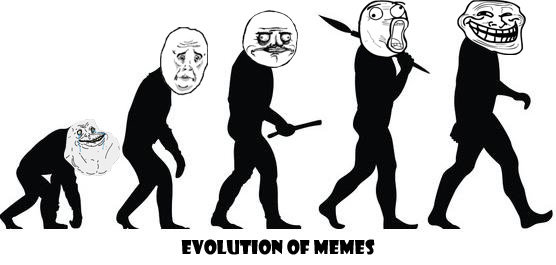
Up until the year 2010, memes were an obscure term. Today, they are ubiquitous, they are everywhere. The moment you open your social media profile, you will rapidly come across a handful of memes to entertain from. While until a long time now, memes were simply an accumulation of pictures for the entertainment of the internet as a whole. Presently, they have become integral to social media interaction, consumed every second and shared every minute.
History
The term “meme” was first coined in the year 1976 by a renowned biologist named Richard Dawkins. He wrote a book named ‘The Selfish Gene’. The word ‘mimeme’ is taken from the ancient Greek word ‘mimos’ which implies imitating something. They existed even before the popularity of the internet, as when Dawkins said that all “ideas….tunes….catchphrases….images” which spread from person to person are regarded similar to memes. They are propagated into the meme pool by leaping from one brain cell to the next via imitation, which is a broader procedure. They also compete with each other, within a limitation of resources, time or bandwidth.
Gradually it started evolving, from the early 2000s, like an image typically designed with some humorous content. There were Gifs, especially one of the dancing baby which was created in 1996. Then was a splurge in cat memes, slowly shifting to music memes, satirizing the pop culture, sports, politics and everything under the umbrella. The template was modified, as it continued evolving, it just got better. The screaming goat meme went viral, as well as that of the man crying at the intervention.
Memes run the world of human entertainment today. Formats are made innovative so that they are repurposed for other contexts and situations too. It should also be shareable publicly.

All this is testament to the growing familiarity of memes and how they are understood and enjoyed by the general public easily. Today, the use of images is nothing more and special than just memes. We easily realize and grasp them today, sometimes we do not even require any context to get familiarized with the idea. We know how memes work and can manufacture a couple ones in a few seconds. We can make any picture work since we only need the captions.
This has been the formula for every meme now, beginning with copying a format and then designing it with a combination of different pictures. The understanding strengthens by getting repeated exposure to more and more memes.
Modern Memes
Memes are now no longer confined to just images. Today, video memes are also going viral. Mainstream audiences love to watch video memes too, which started gathering momentum from 2007 onward. Numa Numa, Harlem Shake, Chocolate Rai, Gangnam Style, are the most popular ones.

Memes and Psychology
The influx of memes in our lives coincides with the high degree of internet and social media usage. They have become a means of facilitating information, opinion, viewpoints and humour. Laughter has been utilized as a weapon, through memes, to disseminate information to all. Memes are covered in sarcasm, wrapped with layers of self-deprecation and more. Their reinterpretation sends a completely different rhetorical message.

Memes are also very self-replicating. They are cumulative instructions for building and modifying human behaviour, emotions and intellect. Therefore, while the multiple genres compete with each other, memes never die. People have varying opinions about the creation of memes. While some say that intelligence is responsible, others find that it depends entirely on cumulative culture. By this, they refer to the knowledge and information which is passed from one generation to the next. Hence, it is expected to improve with every generation and passing time.
The ideas for memes spread swiftly. Since they are so intangible and malleable, it is easy for people to jump to conclusions upon seeing a particular meme. The vaccine meme and that of the slender man are big examples. But what appeals the most is the psychological and arousal and emotional implications of the meme. Those which produces high levels of excitement among people are the ones which are shared frequently.
Conclusion
Today, memes are in strong control of the internet culture. Our daily release of dopamine is dependant to a huge extent on the viewing of memes. However, memes are not just bound to the element of humour. Rather, people find them as a means of expressing their political aggression, social angst etc. a study in 2016 stated that the term meme was searched ten times more than the word Jesus Christ. Memes have been successfully able to capture the attention span of millennial’s, GenZ and adults alike. Hence, they coherently fulfil the desire for fast and productive media. Rest assured, they will always amuse us with a good laugh.


Comments